

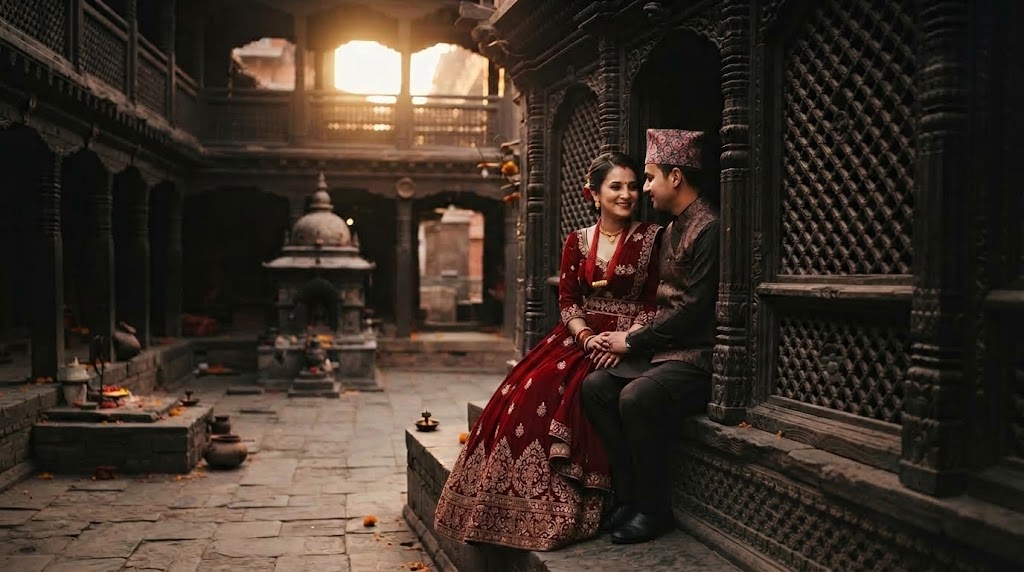
Nepali Wedding Planning Checklist 2026: Complete Step-by-Step Guide & Budget Breakdown
Table of Contents
Planning a wedding in Nepal can feel overwhelming at first.
When should you book the venue? How much should you budget? What happens during Swayambar? When should you hire your photographer? What should you buy? Who coordinates the Janti? And how do you make sure important family moments are actually captured?
A Nepali wedding can involve much more than a single ceremony. Depending on your family, community and preferences, the celebration may include an engagement or Tikka ceremony, Mehendi, Sangeet, Swayambar, the main Biha ceremony, Janti, Bidai and a reception.
That means successful wedding planning is really about coordinating people, traditions, money, vendors, venues and time.
This complete Nepali wedding planning checklist for 2026 will help you understand the process from the very beginning—from learning how a Nepali wedding works to creating your budget, selecting a venue, organizing rituals and planning professional photography and cinematography.
Note: Wedding customs vary significantly among Nepal’s communities, religions, regions and individual families. This guide primarily discusses common Hindu-Nepali and contemporary Kathmandu wedding practices. Always follow your family’s customs and your Pandit’s or religious officiant’s guidance where applicable.
1. What Is a Nepali Wedding?
A Nepali wedding is not simply a ceremony where two people get married.
For many families, it is a multi-day celebration that brings together two families, relatives, friends, cultural traditions and religious rituals.
Traditional elements may be combined with modern celebrations such as:
- Engagement parties
- Couple photoshoots
- Mehendi
- Sangeet
- Digital invitations
- Wedding films
- Reception parties
- Live music and DJs
- Destination celebrations
Some couples choose an intimate ceremony with close family members, while others organize receptions for several hundred guests.
There is therefore no single formula for a “perfect Nepali wedding.”
The goal of wedding planning should be to create a celebration that respects your traditions while remaining practical for your budget, guest count and personal priorities.
2. What Happens During a Nepali Wedding?
If you are planning your first family wedding, many wedding terms can become confusing.
Engagement / Tikka / Supari
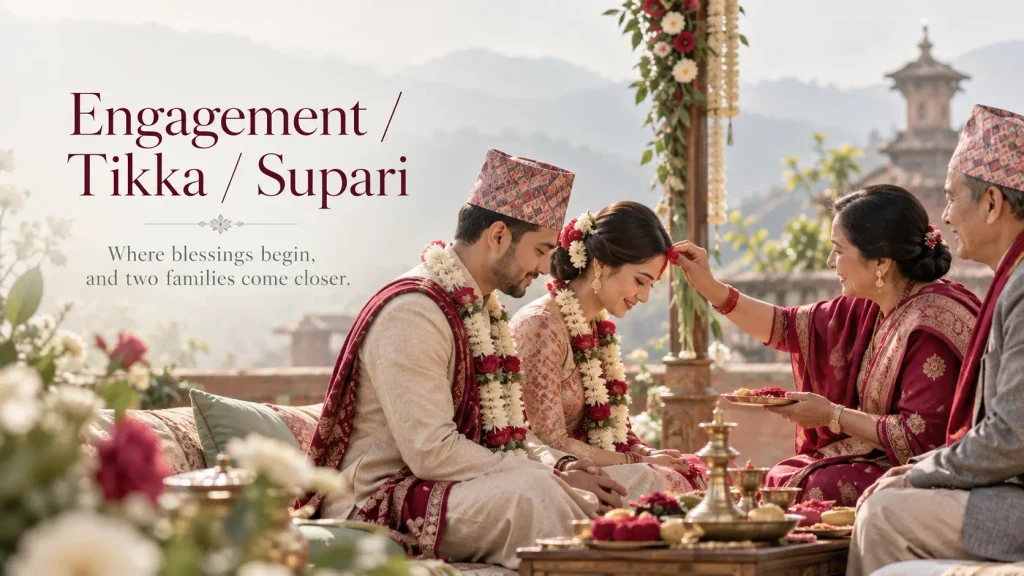
Depending on the family tradition, this may be the formal ceremony where the relationship between the two families is recognized and blessings are exchanged.
Some families also exchange rings during this event.
Mehendi
During the Mehendi ceremony, decorative henna is traditionally applied to the bride’s hands and feet.
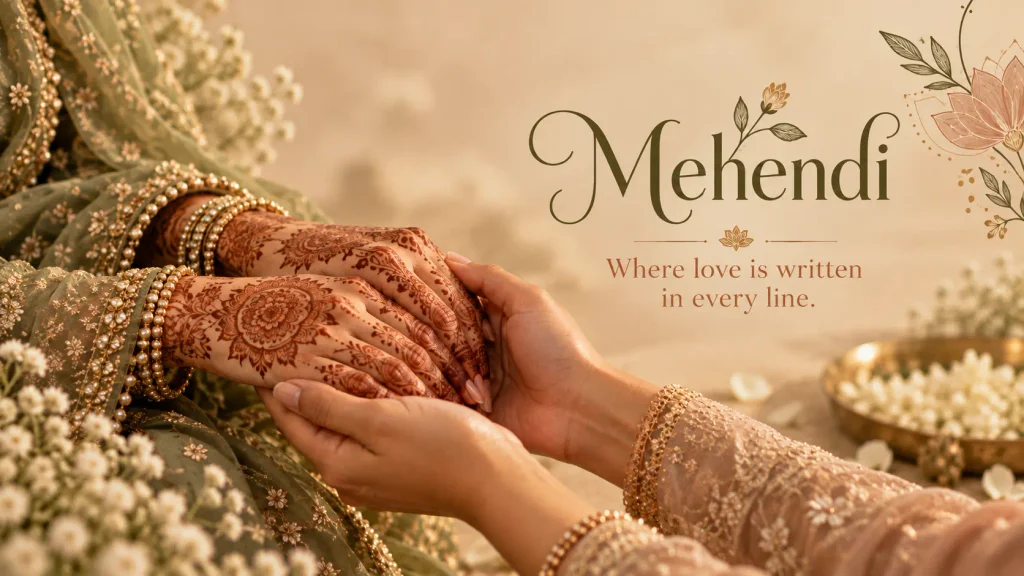
Modern Mehendi celebrations may also include:
- Family photography
- Music
- Dance
- Couple portraits
- Games
- Food
- Short-form videos and Reels
Sangeet
Sangeet is primarily a musical celebration involving friends and family.
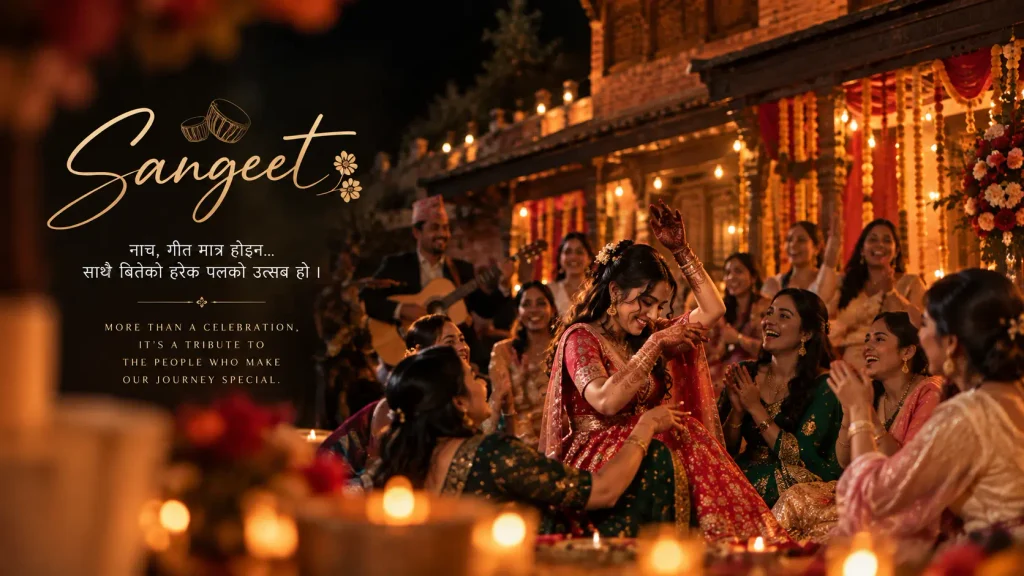
It commonly features:
- Dance performances
- Family performances
- Couple performances
- Live music
- DJ entertainment
- Wedding films or pre-wedding video screenings
Not every Nepali family organizes a separate Sangeet ceremony, but it has become increasingly common in contemporary urban weddings.
Janti
Janti refers to the groom’s wedding procession traveling toward the bride’s wedding venue or home.
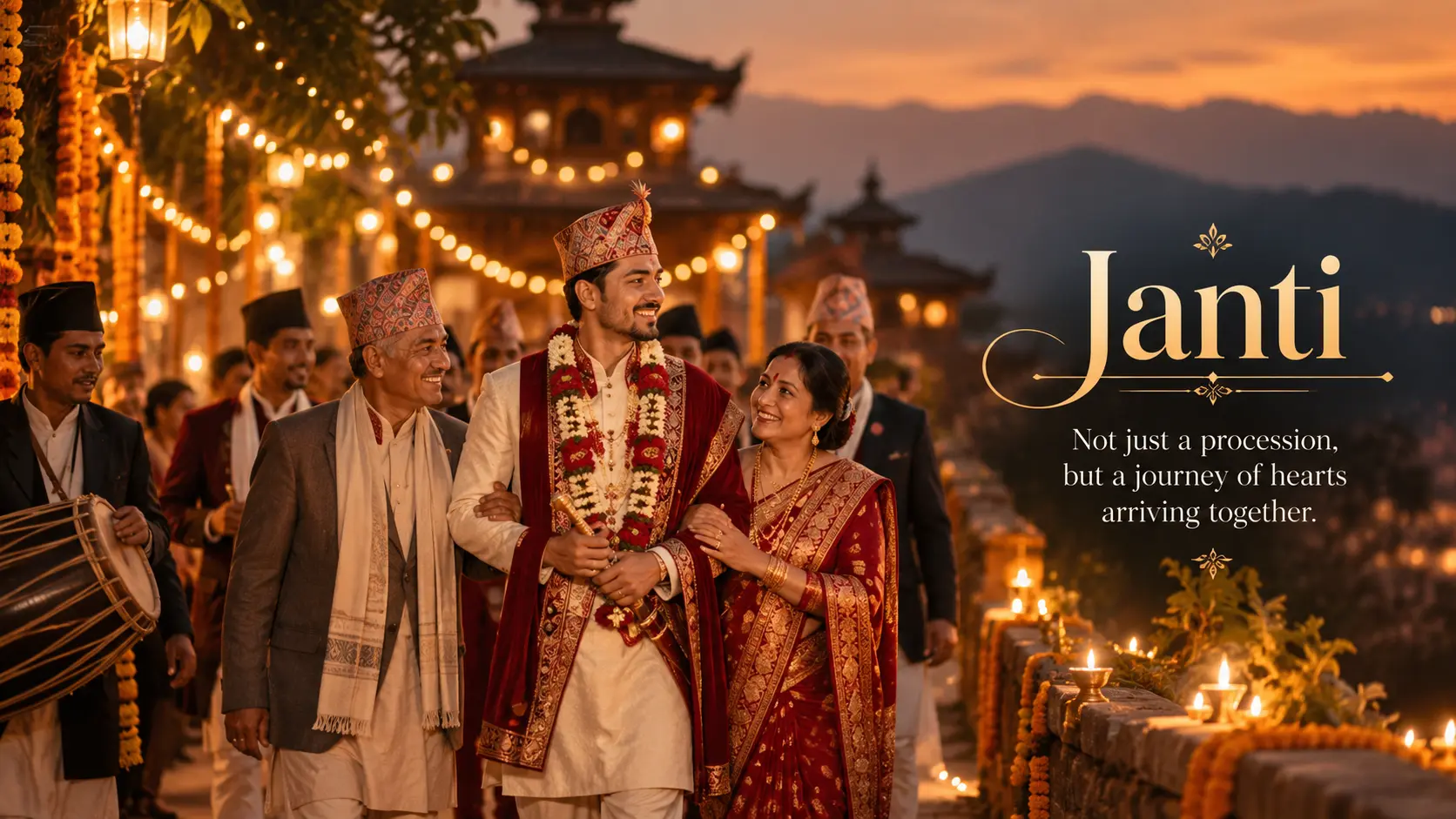
Depending on the family and location, it may include:
- Family members
- Friends
- Panche Baaja
- Dancing
- Decorated vehicles
- Traditional dress
From a photography and filmmaking perspective, the Janti is often one of the most energetic parts of the wedding day.
Swayambar
During Swayambar, the bride and groom formally meet for important ceremonial exchanges.
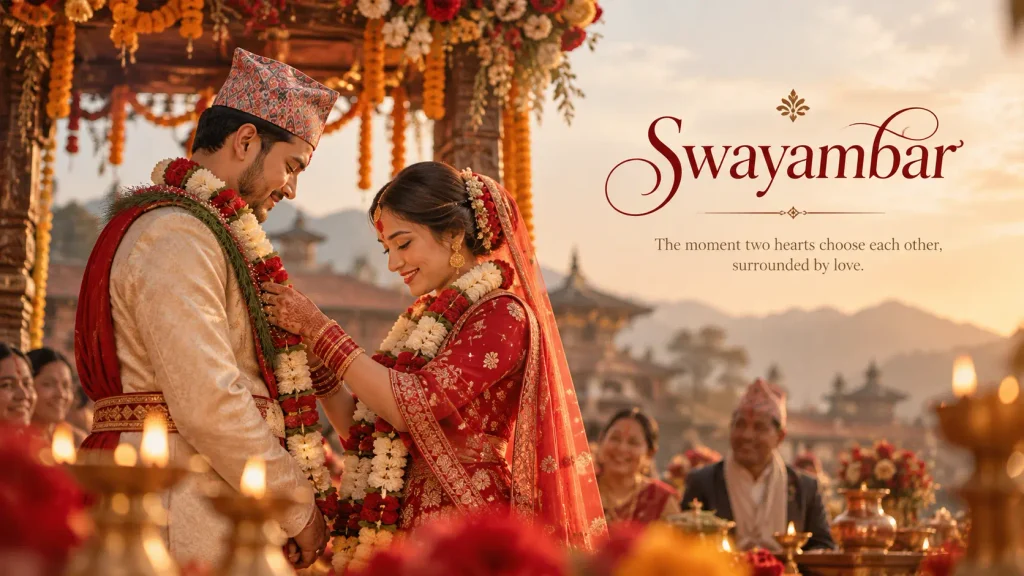
Depending on family customs, this can involve garlands, blessings and other traditional rituals.
Kanyadan
In Hindu wedding traditions, Kanyadan is an important ceremonial moment involving the bride’s parents and the couple.
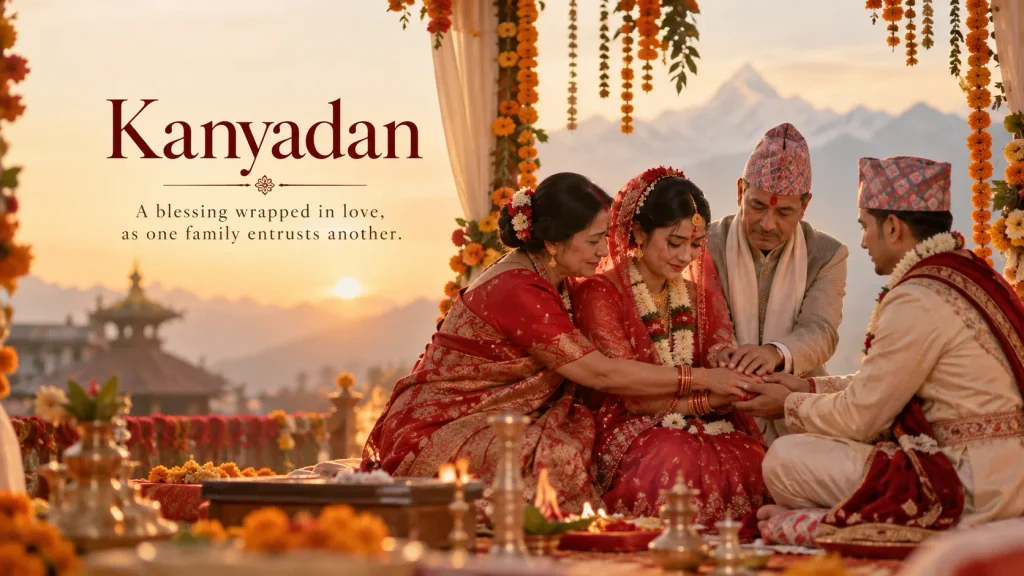
Because customs and interpretations vary between families, your Pandit should guide the exact ritual procedure.
Saptapadi
Saptapadi refers to ceremonial steps associated with the sacred wedding ritual.
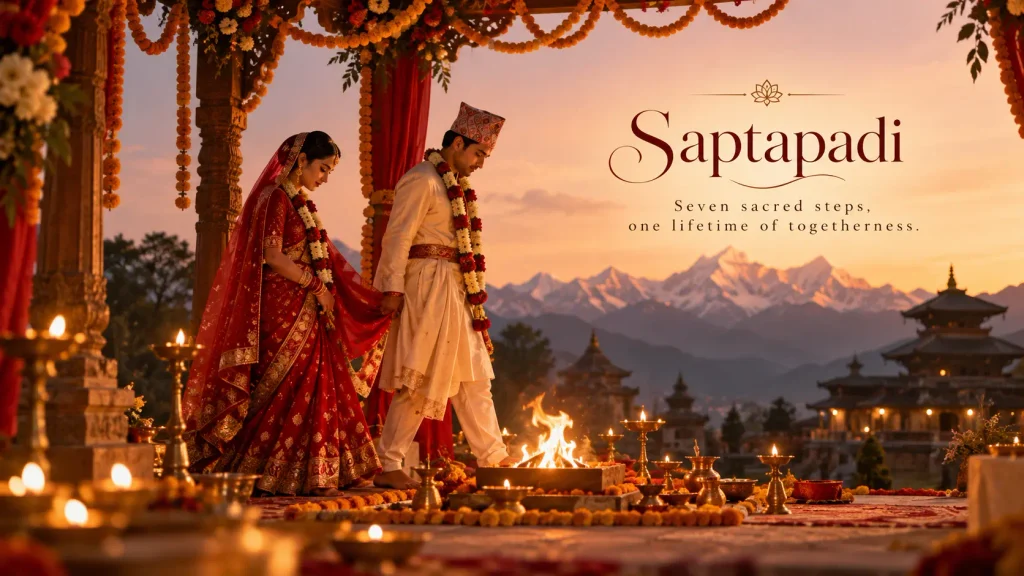
The exact procedure can differ according to tradition.
For wedding planning purposes, your photography and cinematography team should know beforehand when these important rituals are expected so that cameras and audio are positioned correctly without disturbing the ceremony.
Sindoor and Pote
Sindoor and Pote have important symbolic roles in many Hindu-Nepali marriage traditions.
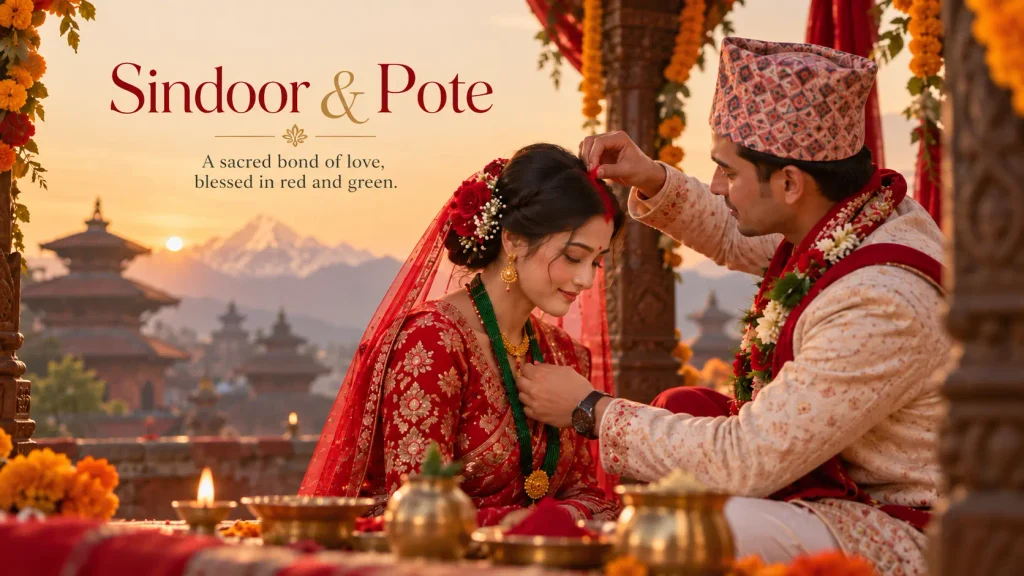
Their use and ceremony may differ between communities and families.
Bidai
Bidai is traditionally the moment when the bride departs with her new family after the wedding rituals.
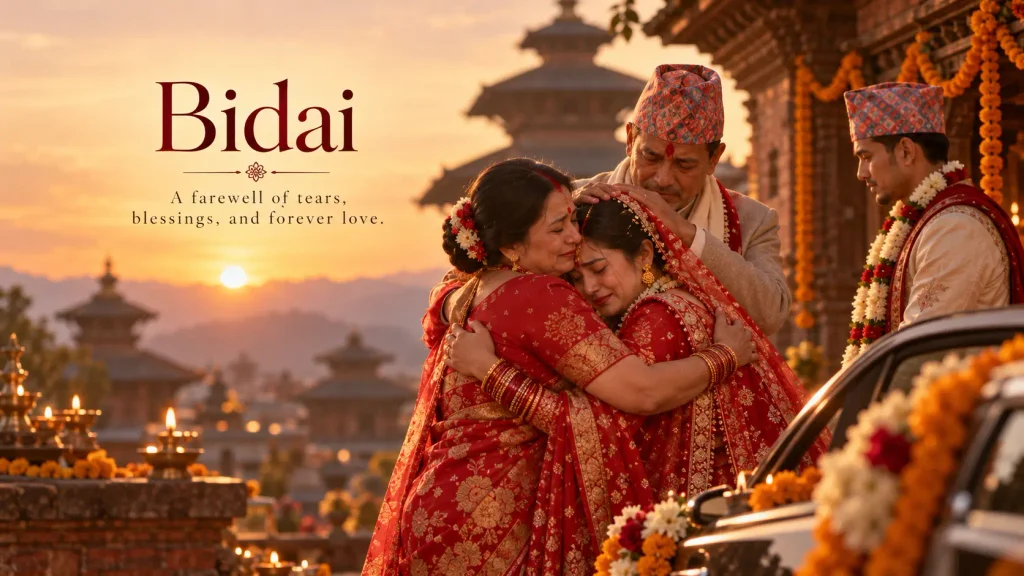
For many families, it is one of the most emotional moments of the wedding day.
It should never be treated as just another item on the photographer’s shot list.
Enough time should be allowed for the family to experience the moment naturally.
Wedding Reception
The reception is generally the more social part of the celebration.
It may include:
- Couple entrance
- Stage greetings
- Family photography
- Speeches
- Dinner
- Music
- Dancing
- Entertainment
Reception photography therefore requires a different approach from ceremonial wedding photography.
3. What Do You Actually Need to Plan for a Wedding?
Before thinking about flowers, dresses or Instagram inspiration, organize your wedding around eight foundations.
1. Wedding Date
Finalize your wedding date or lagan first.Finalize your wedding date or lagan first. Families following traditional Hindu wedding customs can also check official Panchanga and muhurta information published by the Nepal Panchanga Nirnayak Bikas Samiti.
Nearly every major decision depends on it.
2. Budget
Establish how much your family is comfortable spending.
Avoid beginning with vendor bookings before deciding the financial limit.
3. Guest Count
Guest count influences:
- Venue size
- Food
- Seating
- Parking
- Invitations
- Accommodation
- Transportation
4. Venue
Choose a venue appropriate for your guest count, ceremonies and weather requirements.
5. Rituals and Ceremonies
Decide exactly which events you will organize.
For example:
- Engagement
- Mehendi
- Sangeet
- Swayambar
- Wedding
- Reception
More ceremonies mean more venue, clothing, food, decoration and media costs.
6. Wedding Vendors
Typical wedding vendors may include:
- Venue
- Caterer
- Photographer
- Cinematographer
- Makeup artist
- Decorator
- Florist
- DJ
- Band/Panche Baaja
- Transportation provider
- Invitation designer
- Wedding coordinator
7. Logistics
Someone should be responsible for:
- Vendor contacts
- Event timing
- Transportation
- Guest accommodation
- Payments
- Emergency purchases
- Family coordination
8. Photography and Memories
Decide early how you want your wedding preserved.
Consider:
- Traditional photography
- Candid photography
- Cinematography
- Pre-wedding shoot
- Drone footage where permitted
- Wedding teaser
- Highlight film
- Full ceremony film
- Albums
- Vertical Reels
4. Nepali Wedding Checklist at a Glance
| Time | Main Wedding Tasks |
|---|---|
| 12–9 months | Date, budget, guest estimate and venue |
| 8–6 months | Photography, cinematography, makeup and key vendors |
| 5–3 months | Clothing, jewelry and pre-wedding shoot |
| 2 months | Invitations, décor and catering |
| 4–3 weeks | Transportation, rituals and final guest list |
| 2 weeks | Vendor coordination and timelines |
| 1 week | Final confirmations, packing and payments |
| Wedding Week | Execute ceremonies and enjoy the celebration |
5. One Important Rule: Decide What Matters Most
Not every part of the wedding needs the maximum budget.
Before spending money, ask:
What will matter most to us after the wedding is over?
- One couple may prioritize food.
- Another may prioritize jewelry.
- Another may want an intimate destination wedding.
- Another may care most about photographs and films.
- Define your top three priorities before dividing your budget.
- That single decision can prevent unnecessary spending later.
How Axis Studio Helps Throughout Your Wedding Journey
Photography should not begin when the photographer arrives at the venue.
For better results, visual planning should begin before the wedding.
Axis Studio approaches wedding coverage as a complete visual journey that can start before the ceremony and continue through final album delivery.
Before the Wedding
Axis Studio can help couples plan visual elements such as:
Pre-Wedding Photography & Films
A pre-wedding shoot gives couples time to become comfortable in front of the camera before the wedding itself.
The photographs and footage can also become useful assets for:
- Invitations
- Reception displays
- Social media
- Wedding teasers
- Welcome boards
Digital Wedding Invitations
Instead of creating an invitation completely separately from the photography, pre-wedding photographs and video footage can become part of the invitation’s visual identity.
This creates a more consistent wedding look.
Photography Timeline Planning
Before the wedding, the team can review:
- Event schedule
- Venue
- Main ceremonies
- Couple entrance
- Janti timing
- Family portrait time
- Important family members
- Special traditions
This helps reduce missed moments.
During the Wedding
Wedding coverage involves much more than pointing cameras toward the stage.
Important moments often happen simultaneously.
While one camera may be recording the main ritual, another important interaction may be happening between parents, grandparents, siblings or friends.
A planned multi-camera workflow therefore helps document both:
the ceremony itself and the reactions surrounding it.
Axis Studio’s website describes its wedding production as using cinema-oriented equipment, 4K production and an in-house creative team. The studio also states that it coordinates with planning teams while attempting to work unobtrusively around celebrations.
Wedding Photography
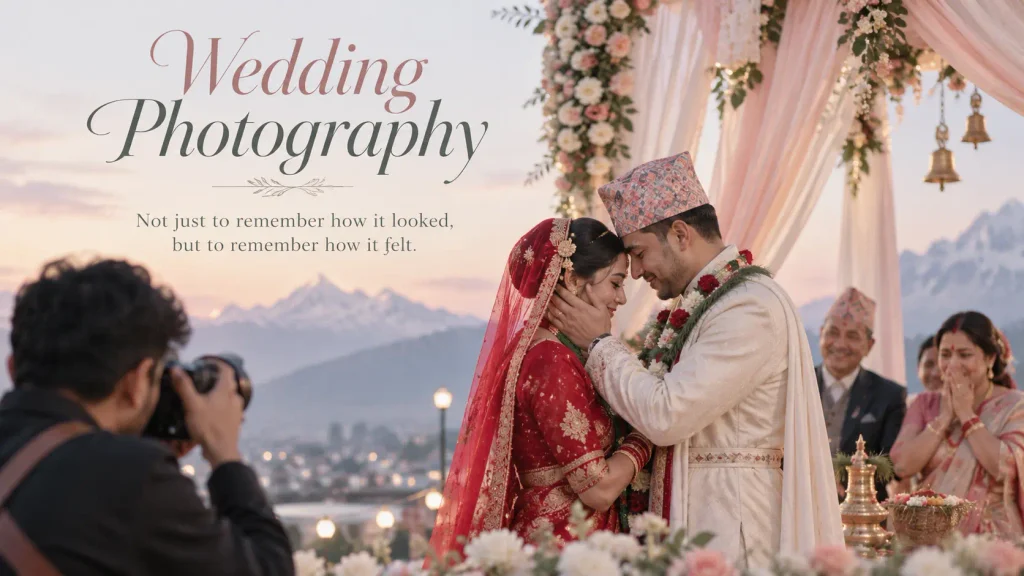
Coverage can include:
- Bride preparation
- Groom preparation
- Details and jewelry
- Venue décor
- Janti
- Swayambar
- Rituals
- Family emotions
- Couple portraits
- Group portraits
- Bidai
- Reception
Cinematic Wedding Films
Video allows couples to preserve things photographs cannot fully reproduce:
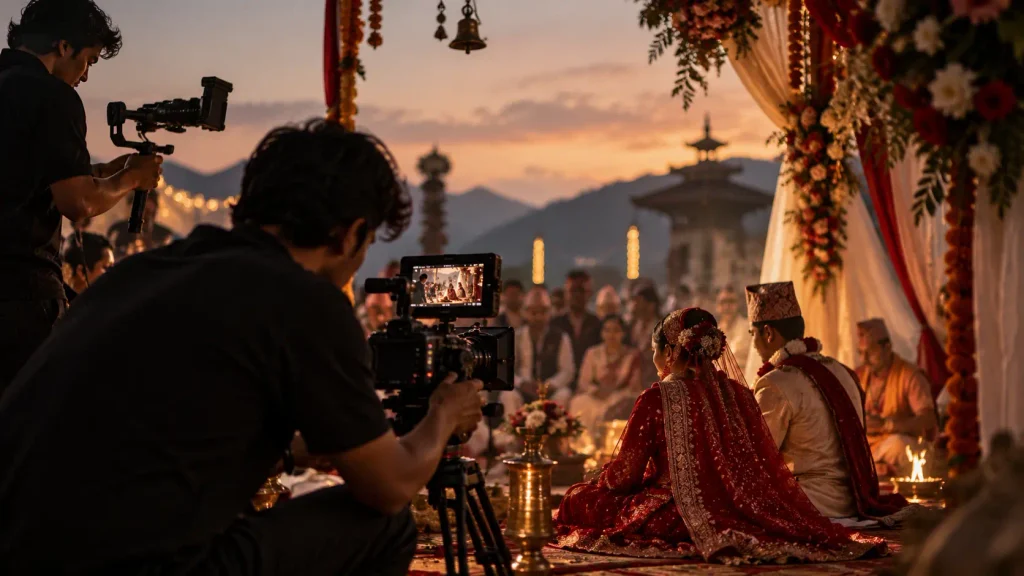
- voices
- music
- movement
- speeches
- laughter
- vows and rituals
- Panche Baaja
- emotional reactions
A wedding film should therefore document the experience rather than simply create slow-motion beauty shots.
After the Wedding
The wedding does not end for the production team when the cameras stop recording.
Post-production determines how the story will eventually be remembered.
This can involve:
- Photo selection
- Photo editing
- Color correction
- Video editing
- Sound design
- Wedding teaser creation
- Highlight film
- Full ceremony edit
- Reel creation
- Album design
- Client proofing
- Final delivery
What Makes the Axis Studio Wedding Workflow Different?
Instead of simply saying “we are better than other photographers,” explain the actual workflow differences.
That is much more convincing.
1. One Connected Wedding Media Workflow
Couples frequently hire different vendors for:
- Pre-wedding photography
- Invitations
- Wedding photography
- Videography
- Editing
- Albums
That can create inconsistent visual styles and additional coordination.
Axis Studio operates across photography, video production, graphic design and post-production, allowing multiple wedding media elements to be handled within a connected creative workflow.
2. An In-House Creative Production Team
Axis Studio describes its production operation as a fully staffed in-house team.
That matters because wedding filmmaking involves several specialties:
- Camera operation
- Photography
- Editing
- Color grading
- Audio
- Graphic design
- Album design
Keeping these stages connected can make it easier to maintain a consistent style from capture to final delivery.
3. Multi-Camera 4K Production
A wedding ceremony contains simultaneous moments.
One camera angle alone may capture the couple while missing reactions from parents or other important family members.
Multi-camera production allows the team to build a more complete visual story from different perspectives.
4. Photography + Cinematography + Design
Axis Studio is not only a photography studio.
Its broader production capabilities include photography, videography, graphic design and digital media production.
For weddings, that means a visual idea can continue across:
Pre-Wedding → Invitation → Wedding Coverage → Highlight Film → Social Content → Album
instead of every asset looking unrelated.
5. Planned Family Storytelling
Some of the most meaningful wedding photographs are not posed couple photographs.
They may be:
- A parent’s expression
- Grandparents watching the ceremony
- Brothers and sisters joking backstage
- Friends dancing during Janti
- Family members seeing the bride for the first time
- Quiet moments before Bidai
A good wedding story needs both the major rituals and these unscripted moments.
That is why providing the production team with a family VIP list and ceremony schedule before the wedding is valuable.
6. Professional Post-Production
Capturing footage is only half of wedding filmmaking.
Post-production can include:
- Image selection
- Color grading
- Sound cleanup
- Music editing
- Story structure
- Film pacing
- Graphic titles
- Exporting different formats
Axis Studio’s wider production work includes in-house editing, color grading and sound-production capabilities.
7. Album Design With Client Proofing
A wedding album should not be printed before the couple is happy with the layout.
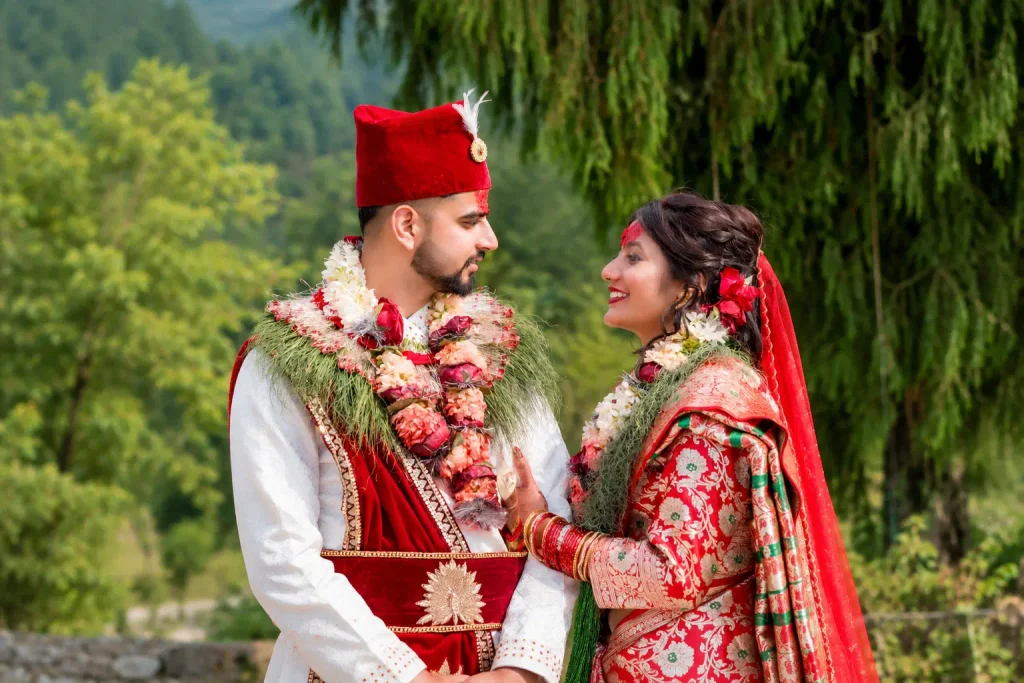
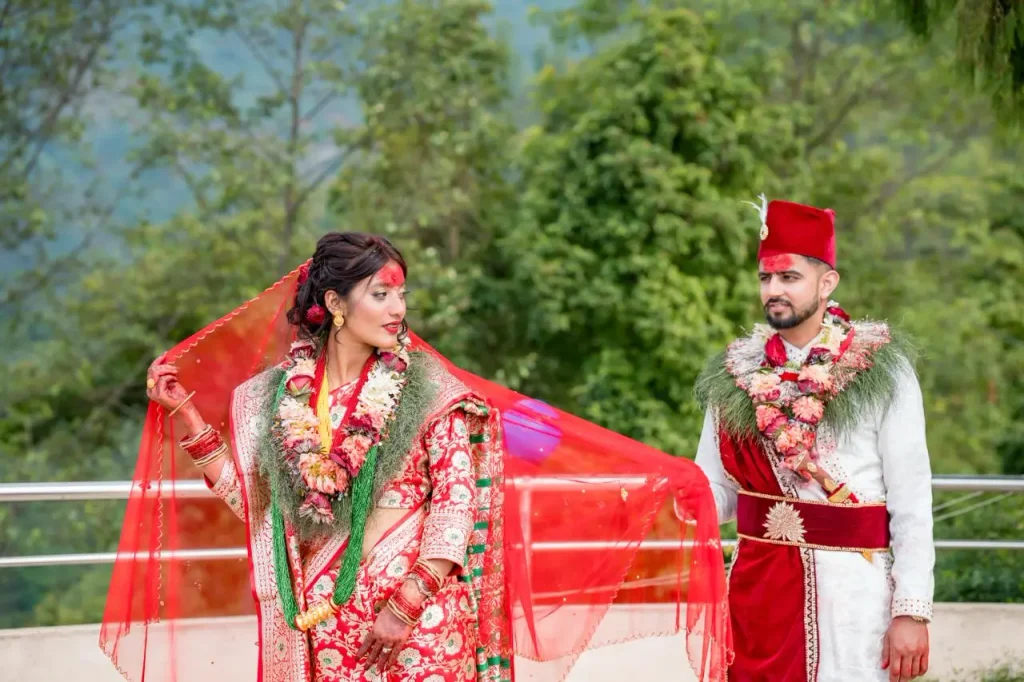
Axis Studio’s published album workflow includes digital PDF proofing so couples can review the album design and request changes before printing.
This is particularly useful for:
- Photo selection
- Correct family names
- Layout changes
- Image replacements
- Final page approval
8. Wedding Content for Modern Platforms
Modern couples often want more than one long wedding film.
They may also want short content that is easy to share.
For example:
- 30–60 second teaser
- Vertical wedding Reel
- Mehendi Reel
- Janti Reel
- Bride/Groom preparation Reel
- Reception highlight
- Couple portrait Reel
Because Axis Studio also works across digital content and media production, wedding assets can be prepared for both long-form viewing and modern social platforms.
A Better Way to Compare Wedding Photography Teams
Instead of asking only:
“How much is your wedding package?”
Ask every photographer these questions:
- Can we see one complete wedding gallery?
- Can we watch a complete wedding film?
- How many photographers and videographers will attend?
- Do you carry backup equipment?
- What happens if an event runs overtime?
- Do you record ceremony audio?
- Do you cover bride and groom preparation?
- Is drone footage included or conditional?
- How many final photographs are delivered?
- How long is the wedding highlight?
- Will we receive a complete ceremony film?
- What is the expected delivery timeline?
- How long are files archived?
- Is album design included?
- Can we approve the album before printing?
A transparent answer to these questions tells you much more than an Instagram page alone.
Who Is Axis Studio Best Suited For?
Axis Studio’s wedding workflow may suit couples who want several parts of their visual production coordinated together rather than treating photography, cinematography and post-production as unrelated services.
It is particularly relevant for couples looking for:
- Multi-event wedding coverage
- Photography and cinematography together
- Pre-wedding production
- Cinematic wedding films
- Short-form social content
- Professional post-production
- Wedding album design
- Digital visual assets
Couples should still compare portfolios, packages, deliverables, schedules and budgets before selecting any wedding production team.
Frequently Asked Questions
What do you actually need to plan for a wedding?
A well-organized wedding should begin with eight core areas: wedding date, budget, guest count, venue, rituals and ceremonies, wedding vendors, logistics, and photography/cinematography. Your guest count affects venue size, food, seating, parking, invitations, accommodation, and transport, so these decisions should be planned together. Pasted text
What is a Nepali wedding?
A Nepali wedding is often more than a single ceremony. For many families, it is a multi-day celebration bringing together two families, relatives, cultural traditions, religious rituals, and modern events such as Mehendi, Sangeet, wedding films, receptions, and couple photoshoots. Customs vary by community, religion, region, and family tradition. Pasted text
What ceremonies are commonly included in a Nepali wedding?
Depending on the family and tradition, a wedding may include Engagement or Tikka, Mehendi, Sangeet, Janti, Swayambar, Kanyadan, Saptapadi, Sindoor and Pote, Bidai, and a wedding reception. Not every family follows the same sequence, so couples should plan according to their own customs. Pasted text
When should you start planning a Nepali wedding?
Ideally, major planning should begin several months in advance. In the checklist used in this guide, the first stage starts around 12–9 months before the wedding with the date, budget, guest estimate, and venue. Photography, cinematography, makeup, and other key vendors can then be organized in the following months. Pasted text
What should be finalized first when planning a wedding?
Start with your wedding date or lagan, because almost every major decision depends on it. After that, establish the budget, estimate the guest count, and choose a venue that suits your ceremonies, guest size, and weather requirements. Pasted text
What wedding vendors do you usually need?
Common wedding vendors may include a venue, caterer, photographer, cinematographer, makeup artist, decorator, florist, DJ, Panche Baaja or band, transportation provider, invitation designer, and wedding coordinator. The exact list depends on the size and style of your wedding. Pasted text
What should wedding photography and cinematography include?
Depending on the package, wedding coverage may include bride and groom preparation, jewelry and details, venue décor, Janti, Swayambar, rituals, family emotions, couple portraits, group portraits, Bidai, and the reception. Video coverage can also preserve voices, music, speeches, movement, Panche Baaja, rituals, and emotional reactions. Pasted text
How can couples make sure important family moments are not missed?
Share a family VIP list and ceremony schedule with your photography and cinematography team before the wedding. Important moments may happen away from the main stage, including parents’ reactions, grandparents watching the ceremony, siblings backstage, friends during Janti, and emotional moments before Bidai. Pasted text
How can Axis Studio help with wedding planning and wedding media?
Axis Studio can support the visual side of the wedding journey from pre-wedding photography and films to digital invitation assets, ceremony planning, wedding photography, cinematography, post-production, social-media content, and album design. Pasted text Pasted text
What should you ask a wedding photographer before booking?
Ask to see a complete wedding gallery and film, and confirm the team size, backup equipment, overtime policy, ceremony audio, bride and groom preparation coverage, drone conditions, number of final photos, film length, delivery timeline, archive policy, album inclusion, and album approval process. Pasted text
Plan Your Wedding Story With Axis Studio
Your wedding is made up of hundreds of moments.
Some are planned.
Some happen unexpectedly.
And many will never happen in exactly the same way again.
The goal of wedding photography and filmmaking is not simply to produce attractive images. It is to create a visual record that allows your family to return to those people, voices, expressions and traditions years later.
Axis Studio provides wedding photography and cinematic production from its studio in Chabahil, Kathmandu with services that can cover multiple stages of the wedding journey.

Written by Axis_Studio
Driving digital strategy, engineering excellence, and enterprise tech growth at Axis Studio.