SEO vs. Social Media Marketing: The 2026 Growth Strategy Guide for Businesses
Table of Contents
Every business founder, CMO, and marketing director eventually faces the same resource allocation question:
“Should we invest our budget into Search Engine Optimization (SEO) to rank on Google, or should we double down on Social Media Marketing (Instagram, TikTok, LinkedIn, and Meta Ads)?”
For years, digital marketing agencies have treated this as an either/or debate. SEO agencies argued that social media is temporary and distracting, while social media managers claimed that SEO is too slow and technical.
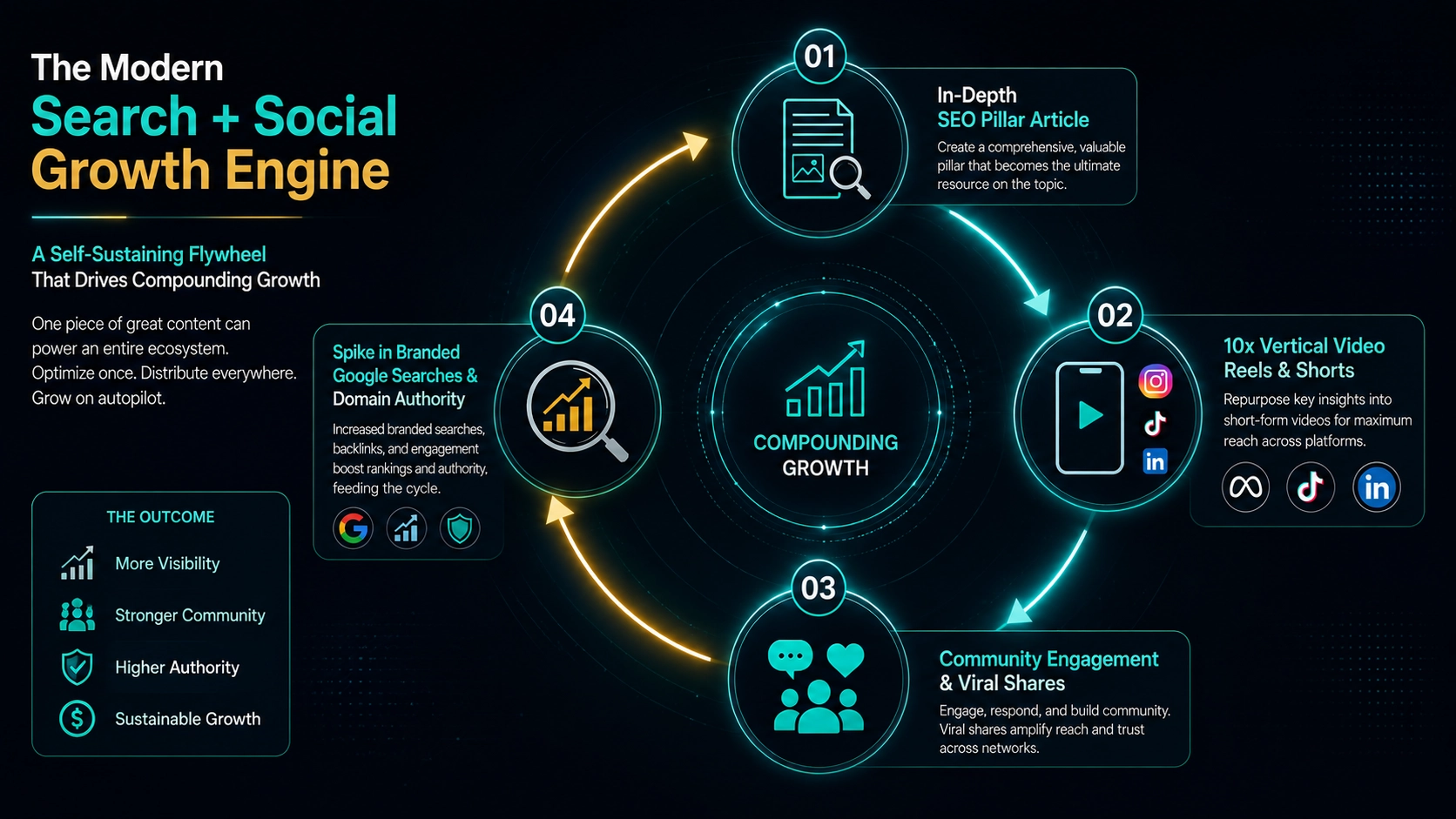
In 2026, treating SEO and social media as separate, competing silos is a recipe for wasted ad spend and missed revenue. The highest-performing domestic and international brands do not choose between them—they integrate both into a self-reinforcing Omnichannel Growth Flywheel.
In this guide, Axis Studio breaks down the fundamental differences between search intent and social discovery, compares the real unit economics and timelines, and reveals how to unify both channels to build sustainable brand authority.
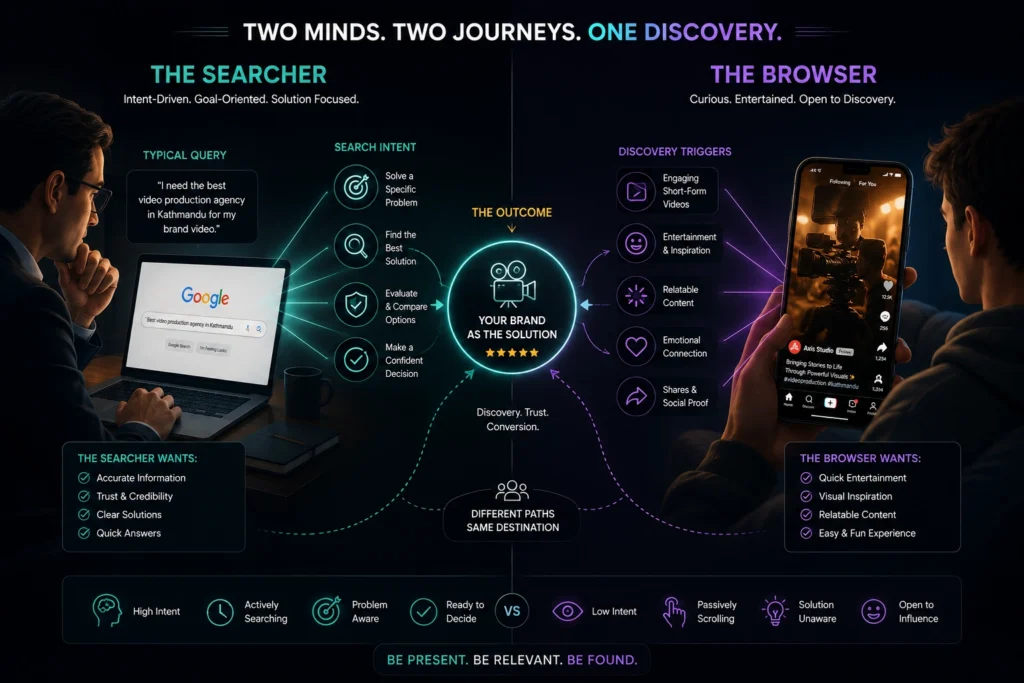
1. The Fundamental Difference: User Intent (Pull vs. Push)
The difference between SEO and social media comes down to User Psychology at the moment of interaction:
| Channel | Mechanism | User State of Mind | Real-World Example |
|---|---|---|---|
| Search Engine Optimization (SEO) | “Pull” Marketing (Inbound Demand Capture) | Active Problem-Solving / High Commercial Intent | A corporate procurement manager searches commercial video production cost kathmandu on Google because they have an approved budget and need an agency proposal immediately. |
| Social Media Marketing (SMM) | “Push” Marketing (Outbound Demand Generation) | Passive Browsing / Entertainment & Discovery | A business owner scrolls Instagram Reels at night and stumbles upon a behind-the-scenes video of Axis Studio editing in DaVinci Resolve. They were not actively looking for an editor, but the quality sparks interest. |
According to data from the HubSpot State of Marketing Report, search engine leads boast an average conversion rate nearly 8x higher than outbound social clicks because searchers have pre-existing, active intent.
2. Direct Comparison: SEO vs. Social Media Marketing
| Strategic Dimension | Search Engine Optimization (SEO) | Social Media Marketing (SMM) |
|---|---|---|
| Primary Objective | Capturing active buyers searching for specific services or products. | Building brand awareness, engagement, and emotional community trust. |
| Speed of Initial Results | 3 to 6 Months (Compounding long-term asset). | Instant to 48 Hours (Immediate feedback from posts/ads). |
| Asset Longevity | Years: A single well-researched article can generate qualified inbound leads for 3+ years. | 24 to 72 Hours: Organic social posts decay quickly in algorithm feeds unless boosted. |
| Cost Structure | Upfront investment in technical optimization and high-quality writing; zero cost per click. | Ongoing creative production and recurring ad spend on Meta/TikTok/LinkedIn. |
| Primary Channels | Google, Bing, YouTube Search, Google Maps. | Instagram, TikTok, Facebook, LinkedIn, YouTube Shorts. |
| Best Used For | High-ticket services, B2B procurement, emergency/local solutions, medical/legal/corporate. | Impulse purchases, lifestyle brands, visual showcases, events, and viral hooks. |
3. The 2026 Omnichannel Growth Flywheel
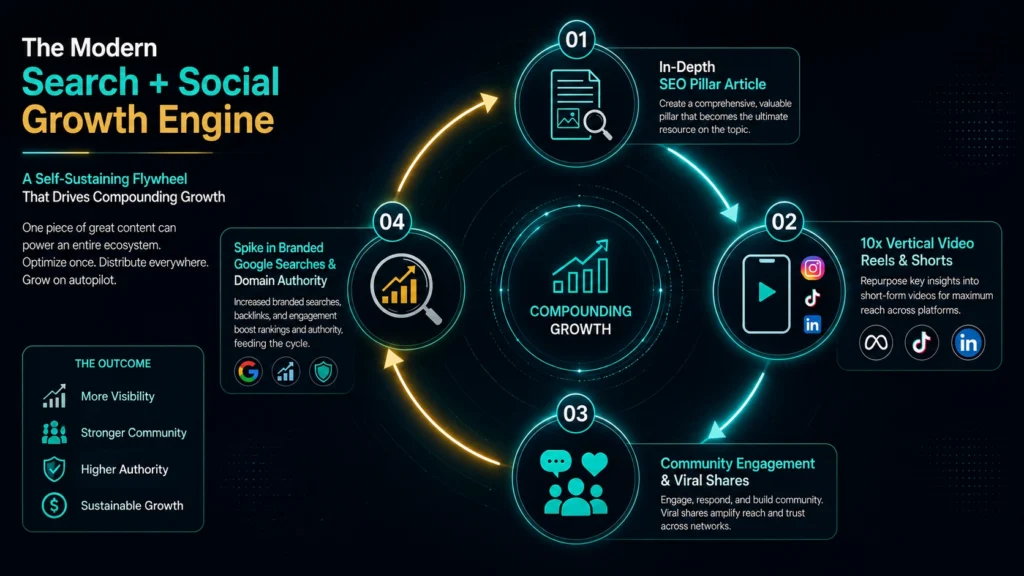
Smart marketing teams no longer choose between SEO and social media—they run them in a closed loop:
- Step 1: Publish Deep Research (SEO Core): You publish a comprehensive, 2,000-word guide on your website targeting a high-intent keyword (e.g., outsource video editing for agencies).
- Step 2: Chop into 10 Micro-Assets (Social Video): The video production team at Axis Studio extracts 5 vertical video Reels for Instagram/TikTok, 3 carousel PDFs for LinkedIn, and 2 direct-response video ads.
- Step 3: Drive Social Engagement: The short-form clips spark conversations, shares, and direct messages across social platforms.
- Step 4: Fuel Branded Search & Backlinks: Viewers who discover your brand on social media later search for your exact company name on Google. This surge in branded search volume signals massive authority to Google Search Central ranking algorithms, pushing your website to #1.
4. Budget Allocation Framework by Business Stage
How should you split your digital marketing budget between SEO and Social Media? Here is our recommended allocation based on business maturity:
| Business Stage | Recommended Split | Strategic Rationale |
|---|---|---|
| Early Stage / Startup (Months 1–6) | 70% Social / 30% SEO | You need immediate cash flow and rapid customer feedback. Paid Meta/TikTok ads and organic video reels generate instant inquiries while laying initial SEO foundations. |
| Growth Stage (Months 7–18) | 50% SEO / 50% Social | Balanced flywheel. SEO content begins ranking on page 1, driving consistent organic leads while social media scales retargeting and community engagement. |
| Established Enterprise (Months 18+) | 60% SEO & Organic / 40% Paid Performance | Organic search and brand reputation drive the majority of high-ticket inbound pipeline at low CAC, with paid media used strategically for retargeting and major campaigns. |
5. Why International & B2B Brands Choose Axis Studio
Most creative agencies are fragmented: video production houses know nothing about technical SEO schema, and digital marketing agencies lack the in-house cinema cameras and editing suites to produce high-end video content.
At Axis Studio, we bridge both worlds under one roof:
- Cinema-Grade Production: 4K video ads, podcast studio suites, and multi-cam commercial editing.
- Technical On-Page & Local SEO: Schema markup, keyword architecture, and high-ranking editorial guides.
- Full Performance Distribution: Meta, TikTok, and LinkedIn ad management that turns video views into qualified revenue pipeline.
Explore our full range of creative and growth capabilities on the Axis Studio Services page.
Ready to build a customized growth strategy for your business?
👉 Contact Axis Studio today to schedule a discovery consultation.
Frequently Asked Questions (FAQ)
Can I rank on Google without any social media presence?
Yes. Pure SEO relies on technical site structure, keyword relevance, and backlinks. However, having active social profiles accelerates indexation, builds brand search volume, and drives referral traffic that indirectly boosts rankings.
How quickly can I expect leads from social media compared to SEO?
Targeted paid social media ads on Meta or LinkedIn can generate qualified leads within 24 to 48 hours of campaign launch. SEO typically requires 3 to 6 months to establish ranking momentum on competitive commercial terms.
Should I stop paid ads once my website ranks #1 on Google?
No. The best strategy is to dominate both organic search results and run high-converting retargeting video ads to users who visited your website through Google, maximizing total market share.