

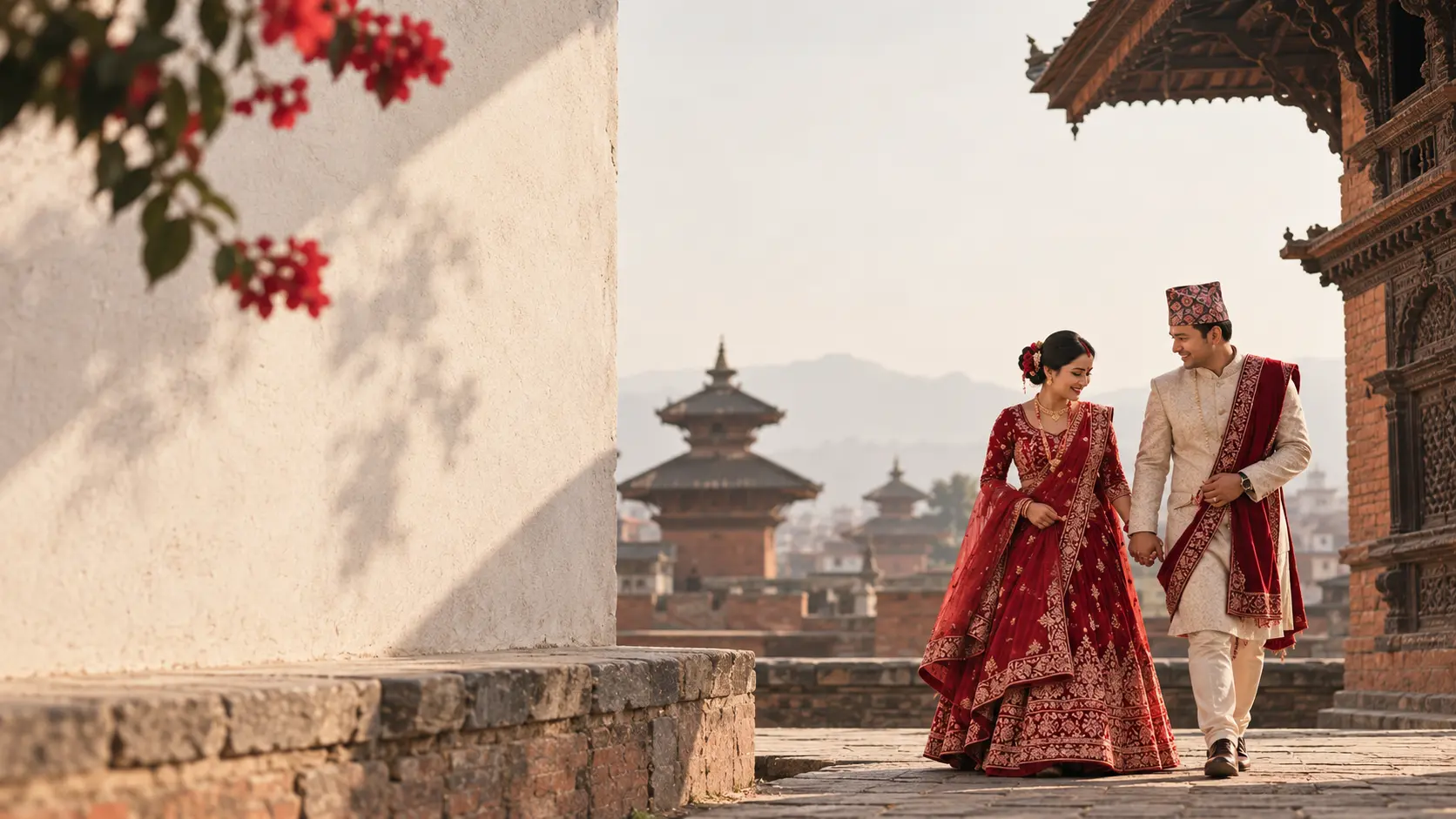
Wedding Photography Poses in Nepal: A Natural Couple’s Guide
Table of Contents
Getting beautiful wedding photography poses in Nepal does not mean standing perfectly still and smiling at the camera.
Most couples are not professional models, and they should not have to behave like models on their wedding day.
The most memorable wedding photographs usually happen when a couple is comfortable—walking together, laughing, talking, holding hands, enjoying a ritual, or simply looking at each other.
Modern wedding photography combines a little guidance from the photographer with real emotions from the couple.
At Axis Studio, our approach is simple: guide the couple when necessary, but leave enough space for genuine moments to happen naturally.
1. Why Movement Creates Better Wedding Photos
One of the easiest ways to feel uncomfortable in front of a camera is to stand completely still for too long.
A photographer may first position you in good light and help with your posture. After that, simple movements can make the photograph feel much more natural.
Instead of thinking:
“Where should I stand?”
Think:
“What can we do together?”
That small change creates more authentic expressions.
Slow Walk and Talk
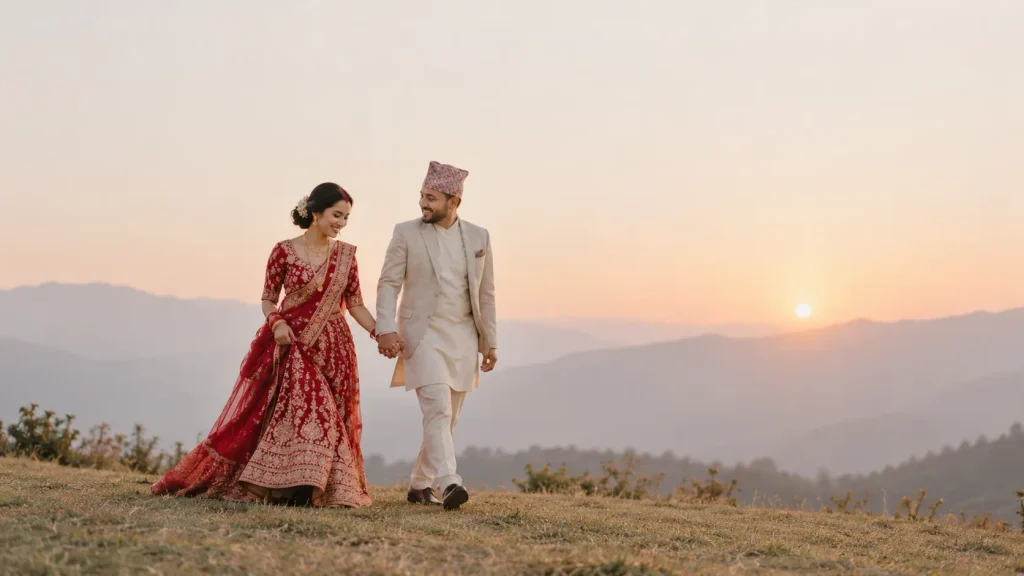
Walk slowly together while holding hands.
Instead of constantly looking toward the camera, talk to each other. You can remember something funny from your relationship or simply enjoy the moment.
Your photographer can capture the natural expressions that happen in between.
Walk, Turn and Come Closer
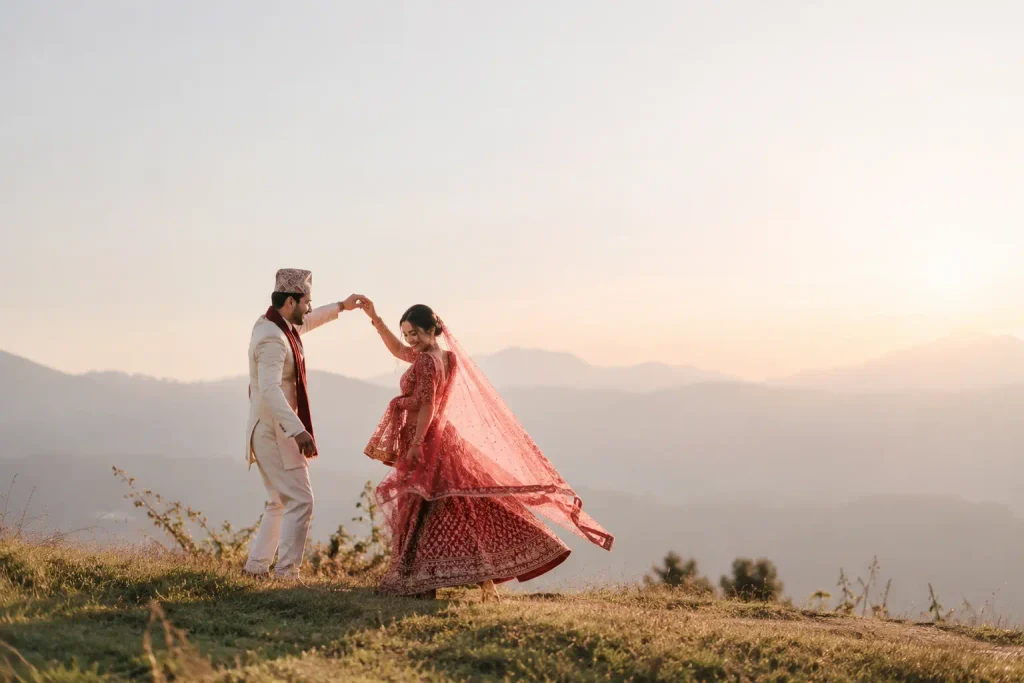
Start by walking together.
One partner can gently lead the other into a slow turn before coming closer again.
This creates movement in the wedding dress, veil and clothing while giving the photographer several different frames from one simple action.
Forehead Rest
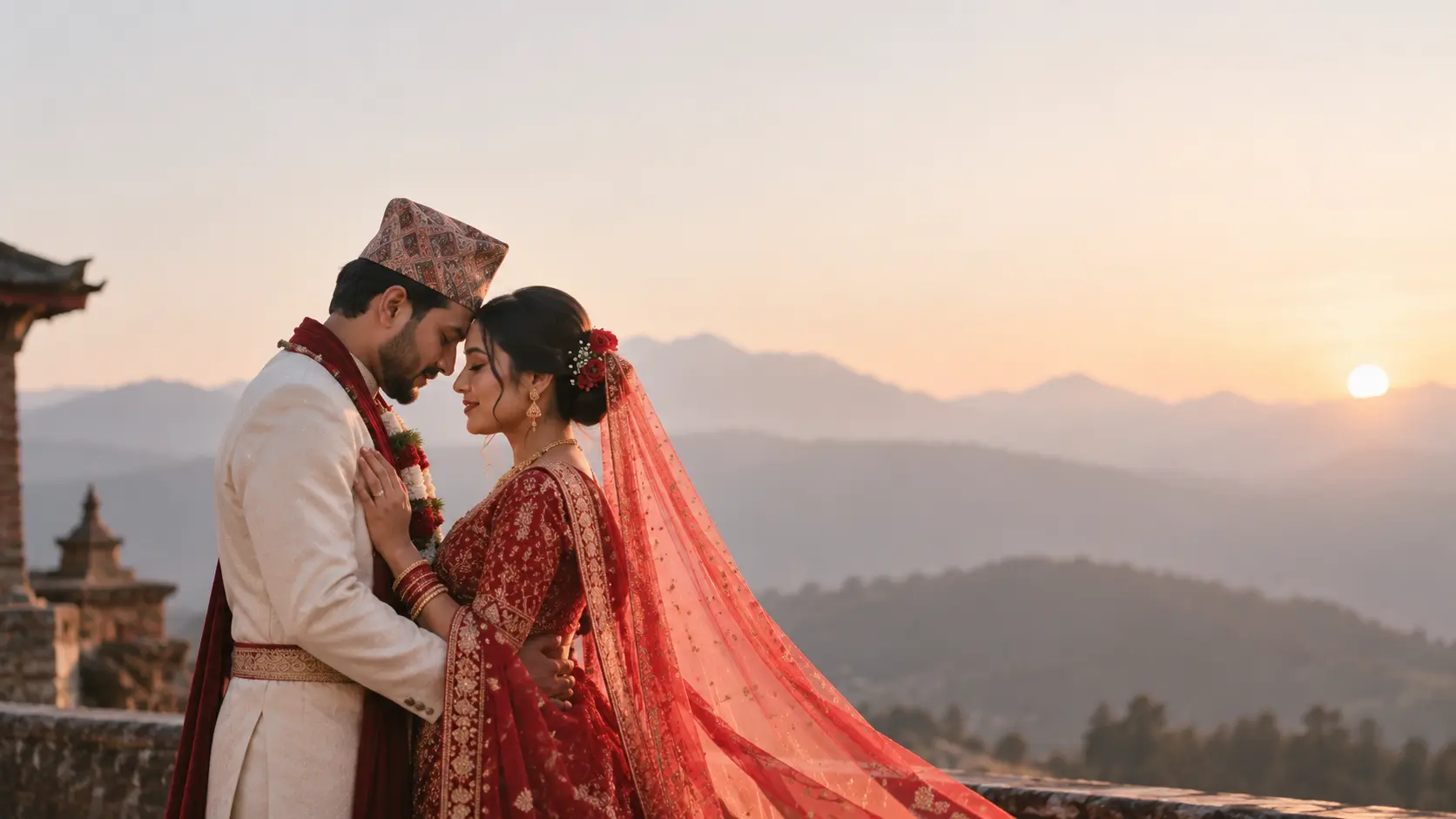
Stand close together and gently rest your foreheads against each other.
Keep your shoulders relaxed.
You do not need to smile at the camera. Simply focus on each other.
This works especially well during quiet moments away from the crowd.
The Close Romantic Moment
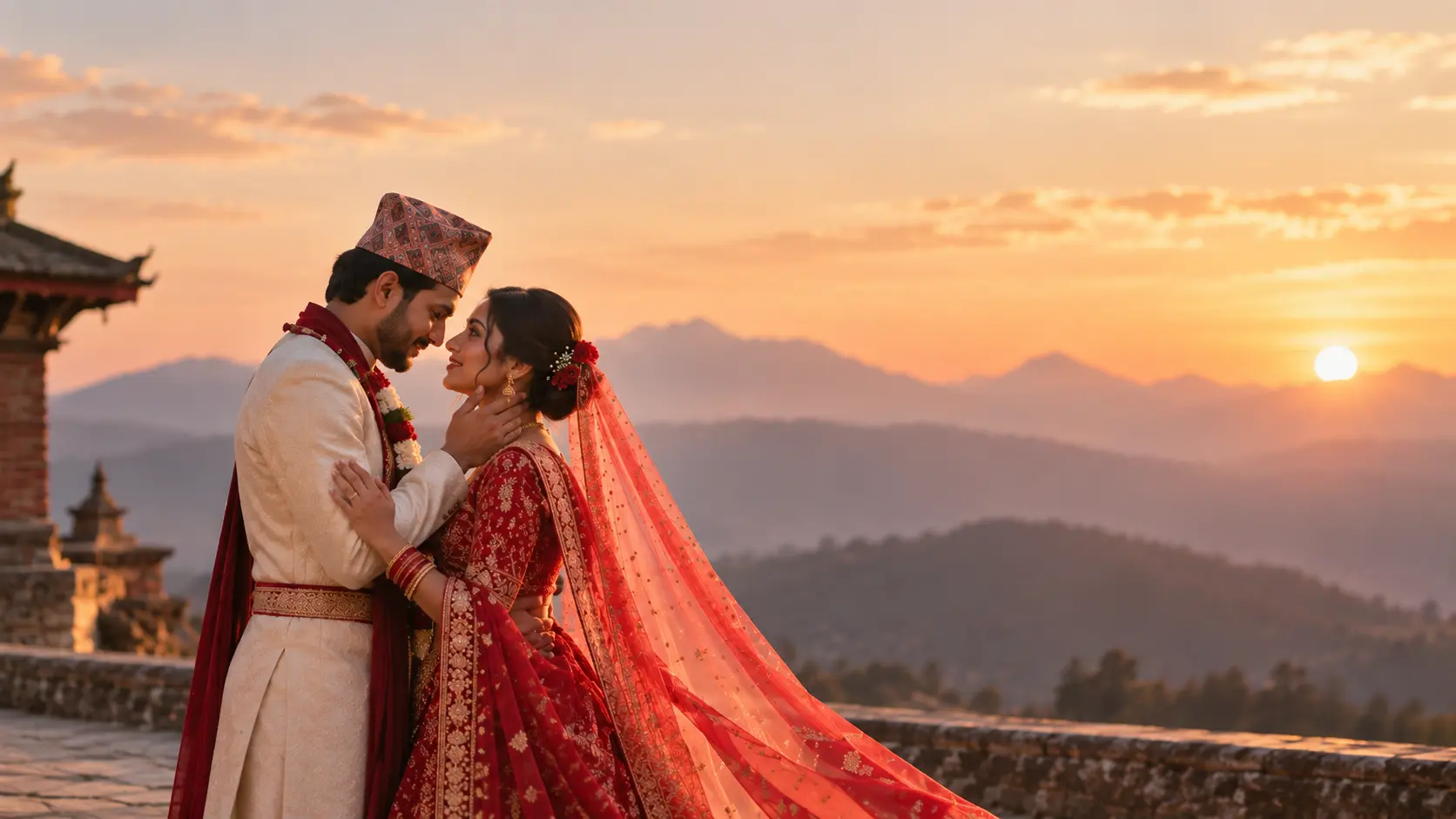
Instead of immediately posing for a conventional romantic portrait, slowly move closer while maintaining eye contact.
The photographer can capture the small smiles and expressions that appear before the final pose.
The goal is not to create a dramatic performance.
The goal is to create a situation where a genuine moment can happen.
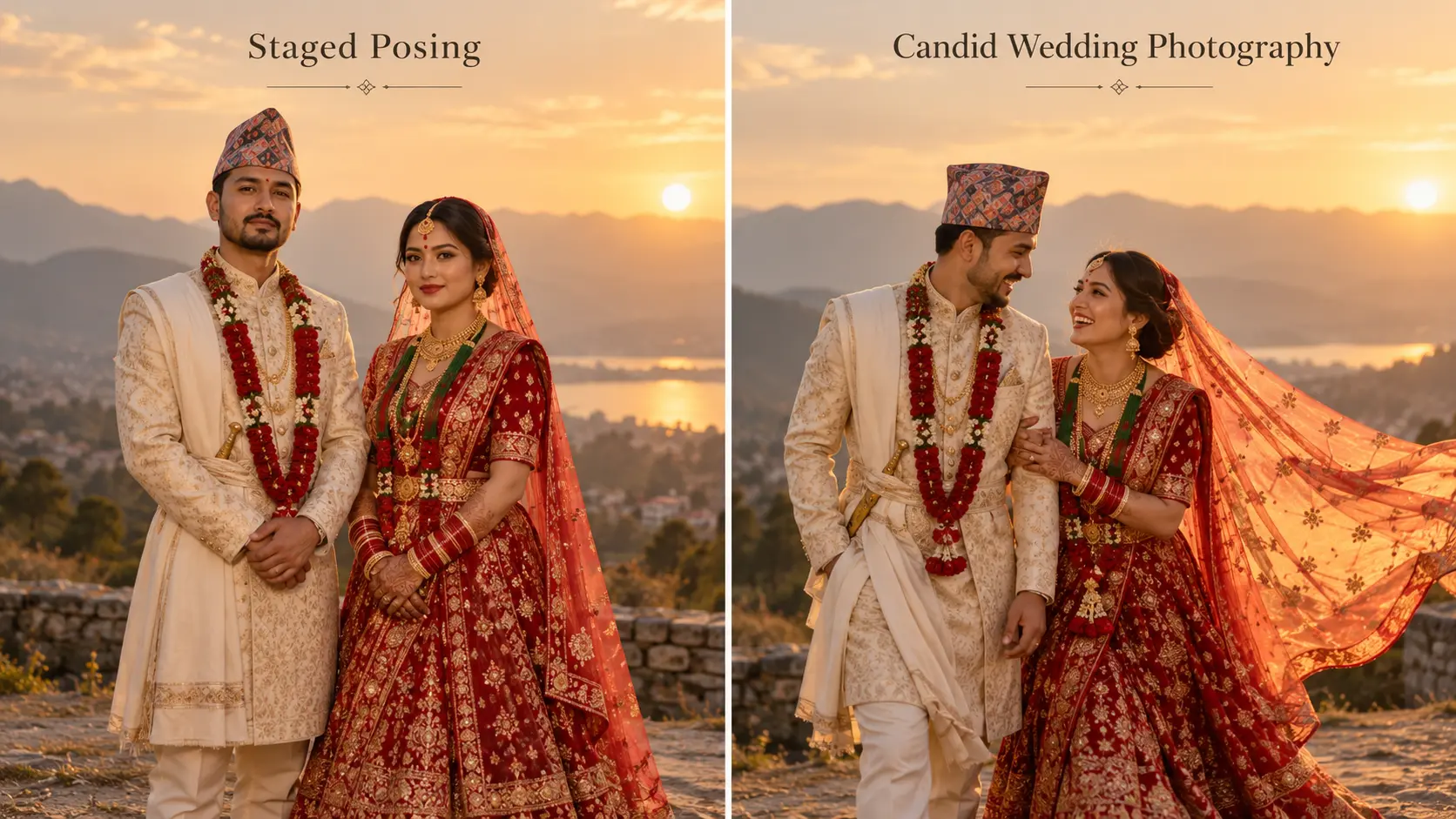
2. Staged Posing vs. Candid Wedding Photography
Traditional stage photographs still have an important place in Nepali weddings.
Parents, grandparents, relatives and guests often want a clear photograph with the bride and groom.
These photographs should not disappear.
However, they should be combined with candid photography rather than becoming the entire wedding album.
A balanced wedding story includes both formal family photographs and natural emotional moments.
| Traditional Formal Photography | Movement-Based Candid Photography |
|---|---|
| Useful for family and group photographs | Useful for emotional couple portraits |
| Couple usually looks toward the camera | Couple often interacts with each other |
| Position is held for a short time | Couple walks, talks or moves naturally |
| Works well on the reception stage | Works well outdoors and around the venue |
| Records who attended the wedding | Records how the wedding felt |
Neither approach needs to replace the other.
The strongest wedding coverage uses each style at the right moment.
3. How to Pose Naturally: Body, Hands & Posture
You do not need complicated posing techniques to look comfortable in wedding photographs.
A few simple adjustments can make a big difference.
Turn Your Body Slightly
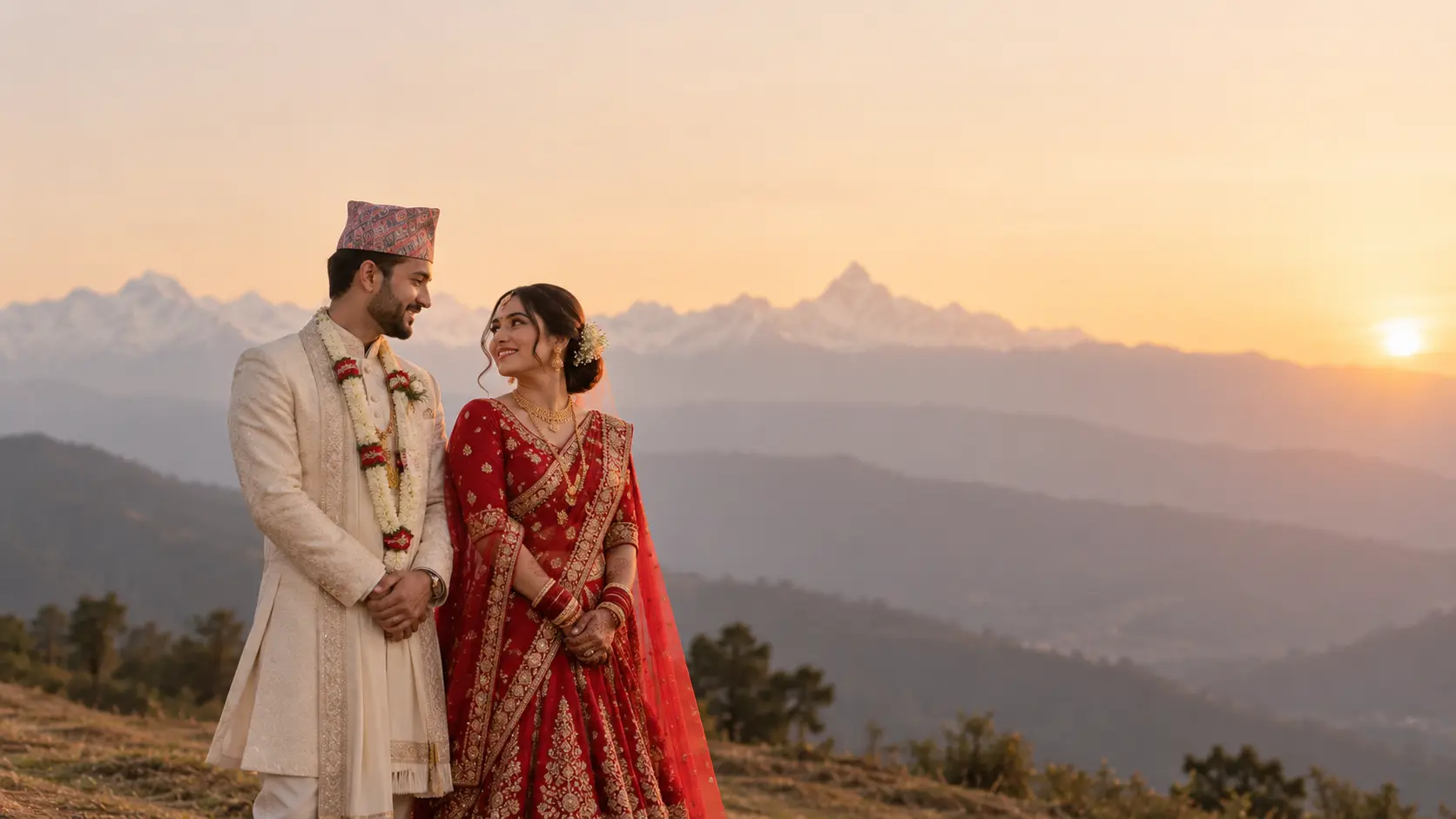
Instead of standing completely straight toward the camera, turn your body slightly to one side.
Around a 45-degree turn is often a comfortable starting point.
Keep your shoulders relaxed and turn your face naturally toward your partner or the camera.
This creates more depth than standing completely flat toward the lens.
Keep Your Hands Relaxed
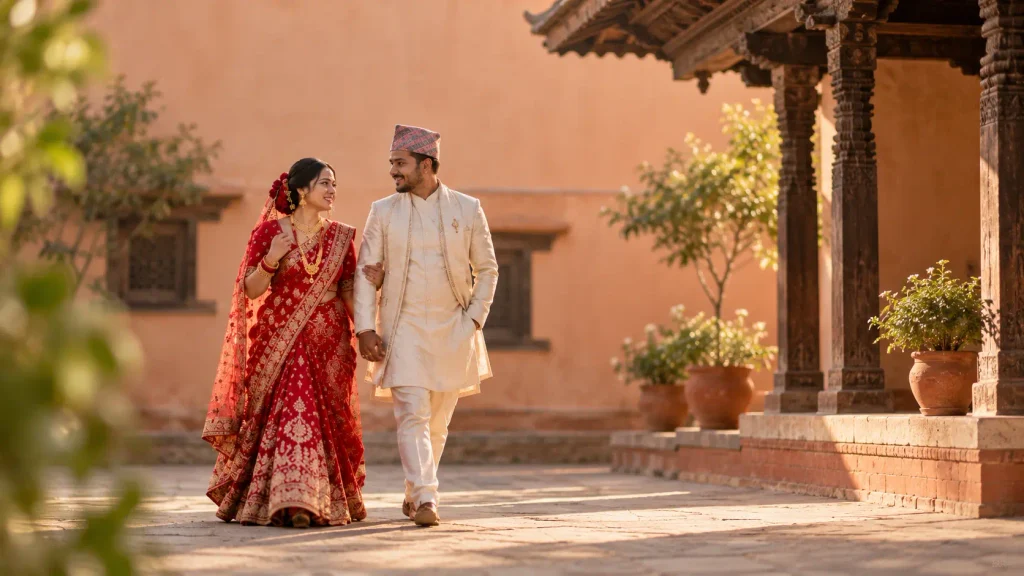
Hands often become tense when people become conscious of the camera.
Give them something natural to do.
For the bride, this could mean:
- Holding the groom’s hand
- Lightly holding the bouquet
- Adjusting the veil or jewellery
- Resting a hand on the groom’s arm
For the groom, this could mean:
- Holding the bride’s hand
- Lightly adjusting the jacket
- Placing one arm comfortably around the bride
- Keeping one hand naturally near a pocket
Nothing should feel forced.
Leave Some Natural Space Around Your Arms
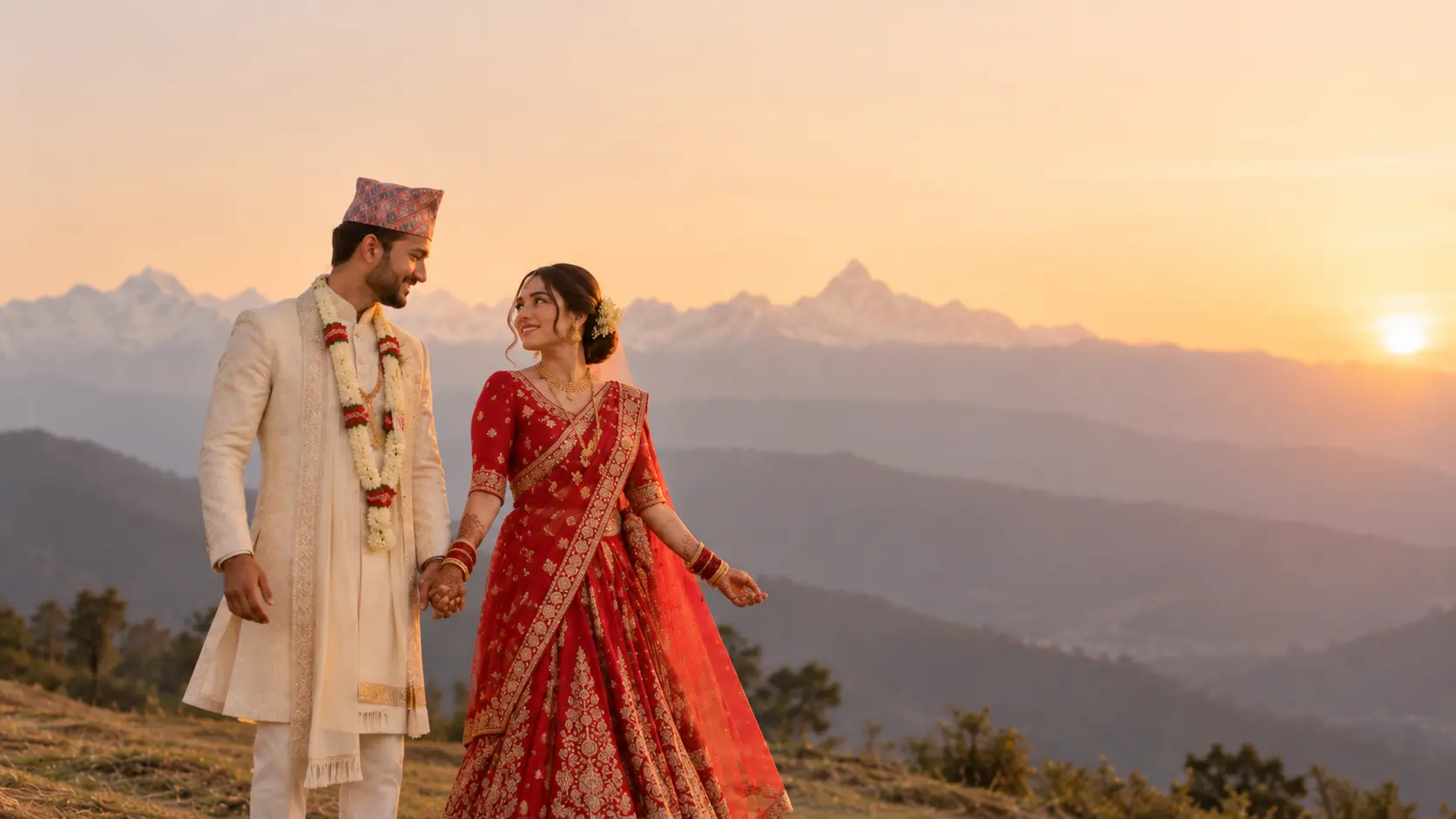
Avoid pressing both arms tightly against your body.
A slight bend in the elbows usually looks more relaxed.
Your photographer can make small adjustments depending on the camera angle and clothing.
Keep Your Posture Comfortable
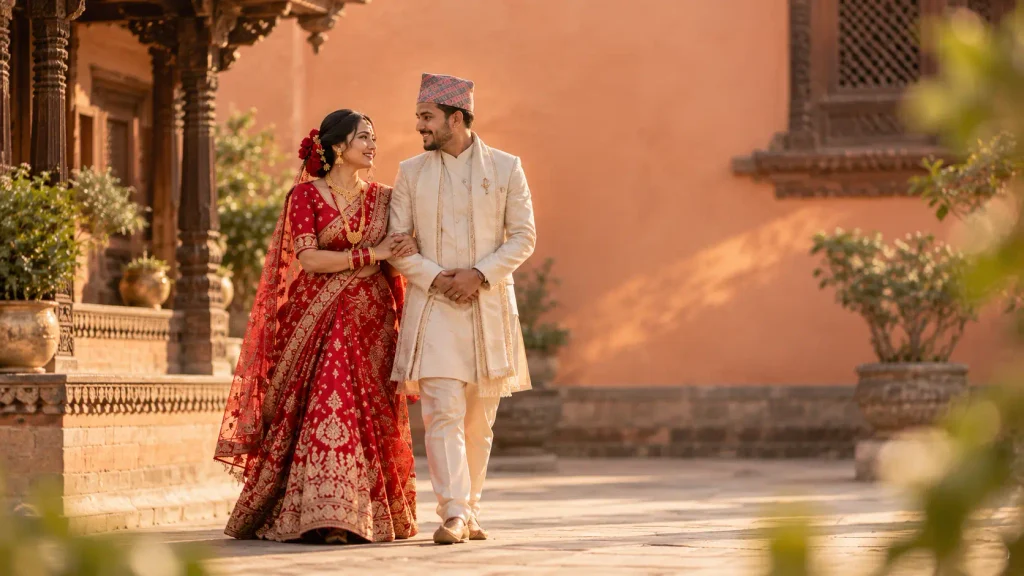
Stand comfortably tall without making your body stiff.
Relax your shoulders.
Keep your chin in a natural position rather than lifting it too high.
Small adjustments are usually enough.
4. Important Nepali Wedding Rituals to Photograph
Wedding photography in Nepal is not only about couple portraits.
The rituals, family members and cultural traditions are often the most meaningful part of the complete wedding story.
A photographer should understand when to guide the couple and when to step back and document what is happening.
Janti and Panche Baaja
The arrival of the Janti is one of the most energetic parts of many Nepali weddings.
Rather than asking everyone to stop dancing for photographs, photographers can move around the celebration and document:
- The groom’s arrival
- Panche Baaja musicians
- Friends dancing
- Parents welcoming guests
- Genuine reactions between relatives
Wide photographs are valuable here because they show the atmosphere around the couple.
Swayambar and Jaimala
The garland exchange creates both traditional and playful photographs.
Important moments can include:
- The couple approaching each other
- The garland being placed
- Family members reacting
- Laughter between the bride and groom
- The couple together after the exchange
The photographer should anticipate these moments rather than repeatedly interrupting the ritual.
Kanyadan
Kanyadan is often one of the most emotional moments of the ceremony.
The photograph should not focus only on the couple.
Parents’ expressions, joined hands, ceremonial elements and family reactions can all become important parts of the story.
Saptapadi
When the couple moves around the sacred fire, photographers can capture both wide and close perspectives.
A wide photograph shows the ceremony and surroundings.
Closer photographs can focus on:
- Hands
- Traditional clothing
- Sacred fire
- Expressions
- Family reactions
Sindoor and Pote
These moments happen quickly.
The photographer should already understand the ceremony and be ready before the important action begins.
This is usually more effective than stopping the ritual and recreating the moment later.
Bidai
Bidai often produces some of the most emotional photographs of a Nepali wedding.
The photographer should give the family space.
Instead of directing every hug or expression, the team can quietly document what naturally happens between the bride, parents, siblings and relatives.
5. Wedding Photo Tips for Camera-Shy Couples
Feeling nervous in front of a camera is completely normal.
Wedding days can already feel overwhelming because of the crowd, clothing, schedule and attention.
Here are a few ways to make photography easier.
Do Not Try to Become a Model
Your photographer should adapt to you.
You should not have to perform complicated poses throughout the day.
Simple movement and conversation are usually enough.
Look at Each Other More Often
Not every photograph needs both people looking directly into the camera.
- Talk.
- Laugh.
- Walk.
- Hold hands.
- Look at your family.
- Enjoy the ceremony.
These moments often create a stronger wedding story than constantly watching the photographer.
Keep a Short Portrait Window
Consider keeping around 10–15 minutes aside for couple portraits.
Choose a quieter location near your wedding venue.
This gives the couple a short break from guests while allowing the photographer to create relaxed portraits.
Golden hour, just before sunset, can be especially useful when the schedule allows it.
Tell Your Photographer What Makes You Uncomfortable
Good communication before the wedding is important.
If you dislike certain poses or feel uncomfortable with particular types of photographs, mention it during the consultation.
Your photography team can then plan around your preferences.
6. Planning Better Couple Portraits
Beautiful wedding photography is created before the photographer presses the shutter.
A little planning helps considerably.
Discuss Your Wedding Schedule
Your photographer should know approximately when important rituals will happen.
This helps the team prepare the right camera position without interrupting the ceremony.
Share Important Family Relationships
Tell your photographer about important people you definitely want photographed.
This can include:
- Parents
- Grandparents
- Siblings
- Close relatives
- Close friends
A short family photograph list can prevent important combinations from being missed.
Choose a Few Portrait Locations
You do not need ten different locations.
One or two good places with attractive light are usually enough.
Possible locations include:
- A quiet courtyard
- A temple-style venue
- A garden
- A clean indoor window-light area
- A terrace during sunset
Keep the Photography Style Consistent
Before choosing a wedding photographer, review complete wedding galleries rather than only Instagram highlights.
Look for consistency across:
- Daylight photographs
- Indoor ceremonies
- Family photographs
- Night receptions
- Couple portraits
- Emotional moments
This gives you a more realistic idea of what your full wedding gallery may look like.
How Axis Studio Approaches Wedding Photography
At Axis Studio, we aim to combine guided portraits with candid documentation.
We may guide couples when positioning, lighting or composition needs adjustment.
During rituals and emotional family moments, however, our priority is usually to observe and document without unnecessarily interrupting what is happening.
Our wedding coverage can include:
- Couple portraits
- Candid wedding photography
- Traditional ceremony coverage
- Family and group photographs
- Wedding cinematography
- Reception coverage
- Edited wedding films and photographs
You can explore more of our photography and cinematography work on the Axis Studio Services page.
Natural Wedding Photography Is About How the Day Felt
- Years after your wedding, you may not remember exactly where your hands were placed during every portrait.
- But you will remember the people around you.
- You will remember the ceremonies, laughter, music, nervousness, family and emotions.
- That is why good wedding photography poses in Nepal should not be about creating hundreds of perfect-looking poses.
- The goal should be to combine a small amount of professional direction with enough freedom for real moments to happen.
- Formal photographs preserve important family records.
- Candid photographs preserve emotion.
- Ritual photography preserves tradition.
- Together, they tell the complete story.
If you are planning a wedding in Kathmandu or elsewhere in Nepal and want to discuss photography or cinematography coverage, you can contact Axis Studio for a consultation.
Frequently Asked Questions
How can we avoid looking awkward in wedding photographs?
Avoid holding the same pose for too long. Simple activities such as walking, talking, holding hands and looking at each other can help create more natural expressions.
What are the most important photographs at a Nepali wedding?
The exact list depends on the wedding tradition, but important moments can include the Janti arrival, Swayambar or Jaimala, Kanyadan, Saptapadi, Sindoor-Pote, family portraits and Bidai.
Where should we put our hands during couple portraits?
Keep your hands relaxed. Hold your partner’s hand, gently hold an arm or waist, adjust clothing or jewellery, or hold a bouquet naturally. Your photographer can guide you depending on the pose.
What if we are shy in front of the camera?
Tell your photographer before the wedding. A good photography team can use simple prompts, movement and conversation instead of asking you to hold complicated poses.
Should we choose candid or traditional wedding photography?
Ideally, use both. Traditional photographs are valuable for family records, while candid photography captures natural emotions and interactions.
When is the best time for wedding couple portraits?
Soft morning light and the period close to sunset usually provide attractive natural light. However, your photographer should plan around the wedding ceremony rather than allowing portraits to interfere with important rituals.
By Ramesh Shrestha, Creative Lead & Managing Director at Axis Studio

Written by Axis_Studio
Driving digital strategy, engineering excellence, and enterprise tech growth at Axis Studio.